
This crockpot vegetable stew is my go-to when I want something nourishing without standing over the stove. It’s like gathering a handful of humble vegetables and letting them slowly melt into a rich, comforting broth. The magic happens while I go about my day, and the smells of toasted garlic and simmering herbs fill the house, making everything feel cozy.
What I love most is how adaptable it is—whatever vegetables I have on hand, they find their way into this stew. It’s a reminder that you don’t need fancy ingredients to make something deeply satisfying. Plus, it’s a recipe that’s forgiving, forgiving, and perfect for lazy weekends or busy weeknights when you need dinner on autopilot.
This recipe is inspired by the idea of transforming humble, everyday vegetables into a comforting, soul-warming stew that feels like a warm hug on a cold day. It’s about embracing the simplicity of slow cooking to unlock deep flavors without fuss, perfect for busy weekdays or lazy weekends.
The story behind this recipe
- This recipe came together one rainy weekend when I realized I had a fridge full of odds and ends—carrots, potatoes, a lonely celery stalk, and half a bag of frozen green beans. I didn’t want to fuss with multiple pots, so I threw everything into my crockpot, added some broth, and crossed my fingers. The smell that wafted up after a few hours was pure comfort—soft vegetables, smoky paprika, and a touch of thyme filling the house with warmth.
- It’s become my fallback when I need something hearty but low-effort. Over the years, I’ve tweaked it to suit whatever’s in the fridge, making it a flexible, forgiving meal. There’s something satisfying about knowing a simple mix of vegetables can turn into something so nourishing and flavorful without much hands-on time. It’s my kind of cooking—easy, honest, and unfussy.
- heading
- story_type
Ingredient breakdown: key components
- Carrots: I like my carrots slightly sweet and tender, so I chop them into thick rounds. If you prefer softer, peel and dice smaller.
- Potatoes: They add heartiness and a creamy texture when they break down. Russets are starchy; red or Yukon gold give more structure.
- Celery: It brings a gentle, fresh aroma. Use a whole stalk for a subtle crunch, or skip if you want a smoother broth.
- Frozen Green Beans: They’re a lifesaver for quick texture and color. Thaw first to avoid excess water, or toss straight in frozen for convenience.
- Garlic & Herbs: I always add garlic early so it mellows into the broth. Fresh thyme or bay leaves deepen the flavor—don’t skimp.
- Vegetable Broth: I prefer homemade or low-sodium store-bought for control. It’s the stew’s backbone, so choose wisely for richness.
- Olive Oil & Spices: A splash of good olive oil at the end brightens the dish. A pinch of smoked paprika adds smoky depth—adjust to taste.
Spotlight on key ingredients
Carrots:
- I like my carrots slightly sweet and tender, so I chop them into thick rounds. If you prefer softer, peel and dice smaller.
- Potatoes: They add heartiness and a creamy texture when they break down. Russets are starchy; red or Yukon gold give more structure.
- Celery: It brings a gentle, fresh aroma. Use a whole stalk for a subtle crunch, or skip if you want a smoother broth.
Vegetable Broth:
- Frozen Green Beans: They’re a lifesaver for quick texture and color. Thaw first to avoid excess water, or toss straight in frozen for convenience.
- Garlic & Herbs: I always add garlic early so it mellows into the broth. Fresh thyme or bay leaves deepen the flavor—don’t skimp.
- I prefer homemade or low-sodium store-bought for control. It’s the stew’s backbone, so choose wisely for richness.
Notes for ingredient swaps
- Vegetable Broth: Use mushroom or chicken broth for a richer, deeper flavor, or water with added herbs for a lighter touch.
- Carrots: Swap with parsnips for a sweeter, earthier flavor, or zucchini if you want a milder, softer bite near the end.
- Potatoes: Sweet potatoes add a touch of sweetness and a softer texture, while turnips give a slightly sharper bite and more punch.
- Frozen Green Beans: Snap peas or fresh green beans work well—just add them later for a crisper bite and brighter color.
- Herbs: Fresh parsley or cilantro can replace thyme for a fresher, more herbaceous note—add at the end for bright flavor.
- Olive Oil: Avocado oil offers a milder, nuttier flavor, while a splash of sesame oil adds a toasty, fragrant note at the finish.
- Spices: Smoked paprika can be replaced with cumin or turmeric for different smoky or earthy undertones—adjust quantities as needed.
Equipment & Tools
- Large crockpot: To cook everything slowly and evenly without supervision.
- Sharp knife: For chopping vegetables cleanly and safely.
- Cutting board: A stable surface for prepping ingredients.
- Wooden spoon: For stirring and checking the stew’s consistency.
Step-by-step guide to vegetable stew
- Gather all your equipment: a large crockpot, a sharp knife, a cutting board, and a wooden spoon for stirring.
- Prepare vegetables: peel and chop the carrots and potatoes into bite-sized chunks, about 2 cm pieces; slice the celery stalks thinly.
- Add vegetables to the crockpot: start with carrots, potatoes, and celery, spreading them evenly across the bottom.
- Pour in the vegetable broth: enough to cover all the vegetables comfortably, roughly 4-6 cups depending on your crockpot size.
- Add seasonings: toss in a few bay leaves, a teaspoon of dried thyme, and a pinch of smoked paprika for depth.
- Set the crockpot: cover and cook on low for 6-8 hours, or high for 3-4 hours. You’ll want the vegetables tender and the broth fragrant.
- Check halfway: give it a gentle stir, taste the broth, and adjust salt or spices if needed. If vegetables are sticking to the bottom, add a splash of water or broth.
- In the last 30 minutes, stir in the frozen green beans and minced garlic. Cover and continue cooking until green beans are tender and fragrant.
- Finish with a drizzle of olive oil and a squeeze of lemon for brightness. Remove bay leaves and any thyme sprigs.
- Rest briefly: let the stew sit off heat for 10 minutes to let flavors meld. Ladle into bowls, and serve hot with crusty bread.
Once cooked, let the stew sit off heat for 10 minutes. Remove bay leaves and thyme sprigs, then taste and adjust seasoning. Serve with a drizzle of olive oil or fresh herbs if desired.
How to Know It’s Done
- Vegetables should be soft but not mushy, with a slight jiggle when tested with a fork.
- Broth should be aromatic, slightly thickened, with a deep vegetable flavor and balanced seasoning.
- Green beans should be bright and tender, not overcooked or limp.
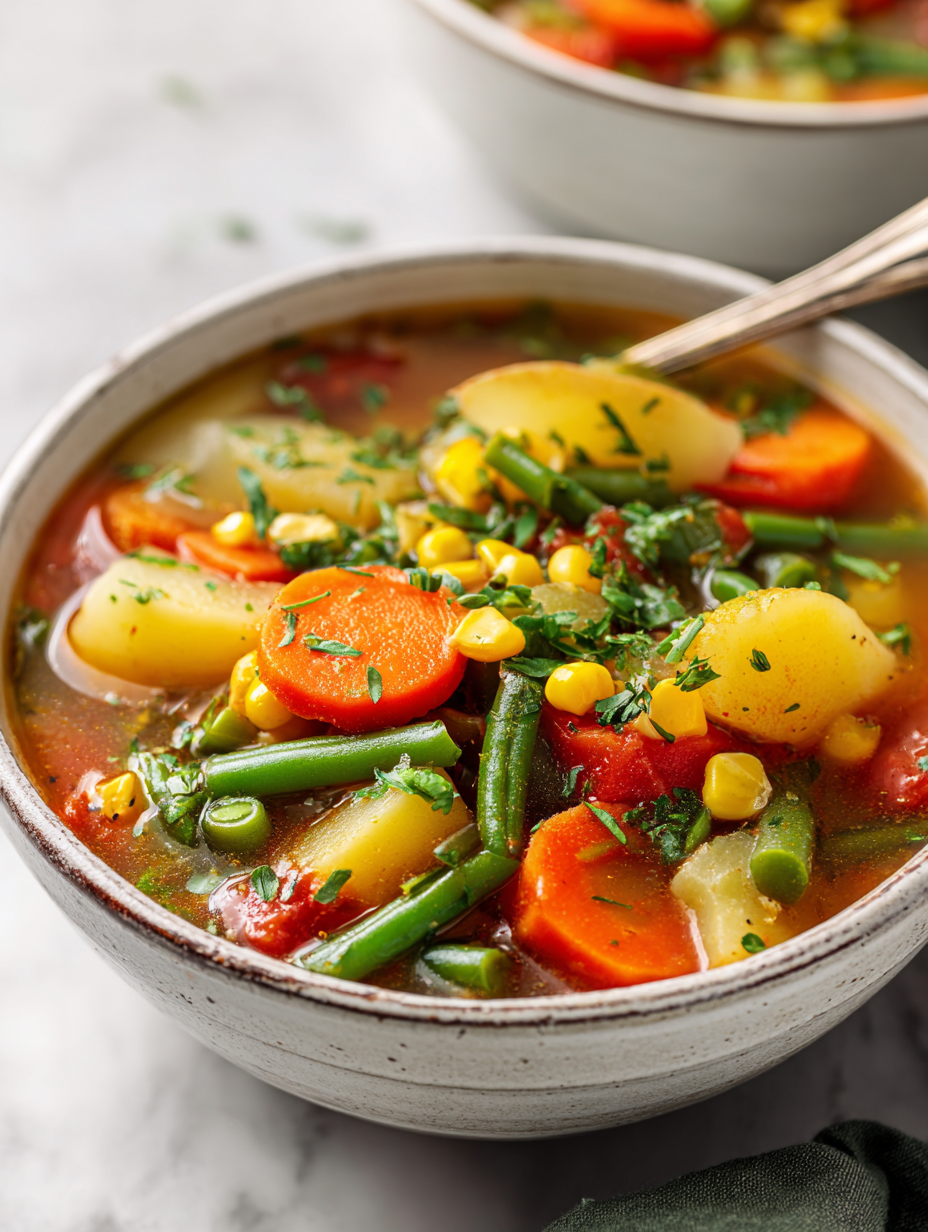
Crockpot Vegetable Stew
Ingredients
Equipment
Method
- Start by peeling and chopping the carrots into thick rounds, and cut the potatoes into 2cm chunks. Slice the celery stalks thinly for even cooking.
- Add the prepared vegetables into the crockpot, spreading them out evenly across the bottom.
- Pour in the vegetable broth, enough to generously cover the vegetables, about 4 to 6 cups depending on your crockpot size.
- Toss in the minced garlic, dried thyme, and smoked paprika to add depth and aroma to the broth.
- Cover the crockpot and set it to low for 6 to 8 hours, or high for 3 to 4 hours. You’ll notice the vegetables soften and the broth becomes fragrant and slightly thickened.
- Halfway through, give the stew a gentle stir with a wooden spoon and taste the broth. Adjust salt and pepper as needed.
- In the last 30 minutes, add the thawed green beans and minced garlic. Cover and let cook until green beans are tender and fragrant.
- Once the vegetables are soft and the flavors meld, turn off the crockpot and stir in two tablespoons of olive oil for a shiny, flavorful finish.
- Remove the lid, taste to check seasoning, and add more salt and pepper if needed. Let the stew rest for a few minutes to settle the flavors.
- Ladle the hearty, colorful stew into bowls, and enjoy the comforting aroma and tender vegetables with crusty bread or your favorite sides.
Notes
Pro tips for perfect vegetable stew
- BOLD VEGETABLES: Layer root vegetables at the bottom for even cooking and flavor absorption.
- SEAR FIRST: Sear tougher veggies like carrots briefly before slow cooking to enhance depth.
- LID ON: Keep the lid closed during cooking to trap flavors and moisture, preventing dilution.
- TASTE MIDWAY: Open and taste after a few hours to adjust seasoning and avoid over-salting.
- FINAL OIL: Drizzle a good-quality olive oil or a splash of lemon juice at the end for brightness.
- AVOID OVERCOOKING: Vegetables should be tender but still hold their shape—check for a slight jiggle.
- STIR GENTLY: Stir only when necessary to avoid breaking down delicate ingredients.
Common mistakes and how to fix them
- FORGOT to adjust heat → Stew may burn or stick; use low and stir frequently.
- DUMPED too much water → Broth may become watery; reduce liquid or increase vegetables.
- OVER-TORCHED vegetables → Vegetables turn mushy; check early and turn down heat if needed.
- SKIPPED seasoning checks → Underseasoned stew; taste and adjust salt/spices before serving.
Quick fixes and pantry swaps
- When stew looks watery → Splash in a cornstarch slurry to thicken quickly.
- If vegetables are overcooked → Patch with crunchy fresh herbs or a squeeze of lemon for brightness.
- Splash too much salt → Rinse some vegetables before adding or dilute with extra broth.
- When stew smells burnt → Shield with a splash of water and gently stir to loosen stuck bits.
- Dumped in too many frozen veggies → Rescue with a quick splash of hot broth and stir well.
Prep, store, and reheat tips
- Chop vegetables the night before; store in airtight containers in the fridge for up to 24 hours, keeping their crispness intact and smelling fresh.
- Prepare broth and measure spices ahead; keep refrigerated for up to 2 days, so flavors meld nicely before cooking.
- Stew can be made entirely in advance; store in the fridge for 3-4 days, with flavors deepening and ingredients softening beautifully.
- Reheat gently on the stove over low heat, stirring occasionally, until steaming and fragrant—check for a rich aroma and tender vegetables.
- For longer storage, freeze in portions for up to 3 months; the stew may develop a slightly deeper flavor after freezing, so reheat with a splash of water or broth if needed.
Top questions about Crockpot Vegetable Stew
1. Can I use frozen vegetables instead of fresh?
Use a variety of root vegetables like carrots, potatoes, and parsnips for a hearty, sweet flavor. You can also add frozen or fresh greens at the end for color and freshness.
2. How do I adjust cooking time for frozen veggies?
Yes, frozen vegetables like green beans or peas work well. Thaw them first to avoid excess water and add them in the last 30 minutes of cooking.
3. Can I substitute the broth used in the stew?
You can swap vegetable broth with chicken or mushroom broth for richer flavor. Water with herbs is fine if you want a lighter, more subtle taste.
4. How can I boost the flavor with herbs?
Add more herbs like parsley, cilantro, or thyme at the end for fresh bursts of flavor. Dried herbs work during cooking, but fresh herbs are best added at the end.
5. What if my stew turns out too watery?
If the stew is too watery, stir in a slurry of cornstarch or flour mixed with cold water, then cook a few more minutes until thickened.
6. How do I know when the stew is done?
Cook on low for 6-8 hours or high for 3-4 hours. Vegetables should be tender and broth aromatic. If not, extend cooking time slightly.
7. Can I add other ingredients like beans or grains?
You can add beans, lentils, or grains like rice or barley for extra sustenance. Add these in the last hour of cooking for best texture.
8. How do I correct the seasoning after cooking?
Adjust seasoning by tasting before serving. A splash of lemon juice or vinegar can brighten the flavors right before plating.
9. How long can I store leftovers?
Yes, the stew keeps well in the fridge for up to 4 days. Reheat on the stove over low heat, stirring occasionally, until steaming.
10. Can I freeze the stew for later?
To freeze, cool the stew completely, transfer to airtight containers, and store up to 3 months. Reheat slowly to preserve texture and flavor.
This stew is a reminder that simple ingredients, when slow-cooked, can turn into something deeply satisfying. It’s perfect for chilly days when you want comfort without fuss, and the house fills with the warm aroma of roasted garlic and herbs. Once you get the hang of it, it’s hard to go back to anything else on a busy weeknight.
In the end, this dish isn’t just about nourishing the body, but about the quiet joy of letting vegetables transform into something soulful with minimal effort. It’s a humble, honest meal that feels like a small victory—an easy way to gather what’s left in the fridge and turn it into dinner. Sometimes, that’s all you need.

Hi, I’m Ava Bennett. Welcome to Glowing With Pride. I’m Ava Bennett, a professional chef, recipe developer, and lifelong believer that food is one of the most powerful ways we express love, identity, and joy. This space was created from years of working in professional kitchens, countless late nights behind the line, and a deep desire to share food in a way that feels personal, proud, and purposeful. Cooking has never just been my career. It has been my language.






Leave a Reply