
This recipe is inspired by my grandma’s Sunday tradition of slow-cooking hearty, comforting soups that fill the house with smoky, earthy aromas, reminding me of family and simpler times.
There’s something about the gentle simmering in a crockpot that transforms humble ingredients into a soulful bowl. It’s a no-fuss, all-day kind of dish that tastes like it’s been cooking for hours, even if it hasn’t.
Making this split pea soup in the crockpot lets me take a deep breath and focus on other chores or just relax, knowing that dinner is quietly coming together with rich, velvety texture and a hint of smoky goodness.
This recipe is inspired by my grandma’s Sunday tradition of slow-cooking hearty, comforting soups that fill the house with smoky, earthy aromas, reminding me of family and simpler times.
The story behind this recipe
- This recipe is born from a memory of chilly Sunday mornings spent with my grandma, where the slow hum of the crockpot was a comforting constant. We’d fill the house with the smoky, earthy scent of dried peas and ham hock, a smell that promised warmth and hearty satisfaction.
- Over the years, I’ve tweaked her method, adding my own touches—like a splash of lemon at the end to brighten the deep, velvety soup. It’s become a little ritual for me, especially when I want something nourishing but effortless.
- Cooking this in the crockpot feels like a quiet act of preservation—of tradition, of flavors, of those lazy, cozy weekends that slip by all too fast.
Ingredient breakdown
- Dried green split peas: I love how they turn silky and almost creamy after cooking; make sure to rinse them well, or they can be a bit gritty if you skip that step.
- Ham hock: It adds a smoky, meaty depth that’s hard to replicate; if you’re vegetarian, toss in smoked paprika or a splash of liquid smoke for that umami punch.
- Carrots: I prefer slicing them thin so they soften evenly and melt into the broth; thicker chunks might stay a bit firm, which is fine if you like a bit of bite.
- Onion: Sautéing onions first in a pan until golden gives a richer base, but if you’re in a rush, just toss chopped raw onions directly into the crockpot—I’ve done it, and it’s still good.
- Vegetable broth: Use a good-quality broth or even chicken stock for an extra layer of flavor; if you only have water, add a teaspoon of smoked paprika or a dash of soy sauce to boost the umami.
- Seasonings: Bay leaf, thyme, and a pinch of black pepper are my go-tos; I sometimes add a splash of apple cider vinegar at the end to brighten the whole thing up with a zing.
- Optional extras: A handful of chopped kale or spinach added at the end can brighten and freshen the soup; just toss it in and let it wilt for a minute or two.
Spotlight on key ingredients
Dried green split peas:
- They become luxuriously silky and almost melt into the broth; rinsing thoroughly avoids grit and cloudiness.
- They soften into a creamy texture, releasing a gentle, earthy aroma that’s the backbone of this soup.
Ham hock:
- It imparts a deep smoky, meaty richness that infuses the entire pot; the fat and connective tissue melt down, enriching the broth.
- Pulling apart the tender, smoky meat at the end is almost therapeutic and adds a satisfying texture contrast.
Notes for ingredient swaps
- Dried green split peas: I love how they turn silky and almost creamy after cooking; make sure to rinse them well, or they can be a bit gritty if you skip that step.
- Ham hock: It adds a smoky, meaty depth that’s hard to replicate; if you’re vegetarian, toss in smoked paprika or a splash of liquid smoke for that umami punch.
- Carrots: I prefer slicing them thin so they soften evenly and melt into the broth; thicker chunks might stay a bit firm, which is fine if you like a bit of bite.
- Onion: Sautéing onions first in a pan until golden gives a richer base, but if you’re in a rush, just toss chopped raw onions directly into the crockpot—I’ve done it, and it’s still good.
- Vegetable broth: Use a good-quality broth or even chicken stock for an extra layer of flavor; if you only have water, add a teaspoon of smoked paprika or a dash of soy sauce to boost the umami.
- Seasonings: Bay leaf, thyme, and a pinch of black pepper are my go-tos; I sometimes add a splash of apple cider vinegar at the end to brighten the whole thing up with a zing.
- Optional extras: A handful of chopped kale or spinach added at the end can brighten and freshen the soup; just toss it in and let it wilt for a minute or two.
Equipment & Tools
- Crockpot: Main cooking vessel to slow cook the soup evenly.
- Knife: Chopping vegetables and prepping ingredients.
- Cutting board: Surface for chopping and preparing ingredients.
- Wooden spoon: Stirring the soup gently without breaking down ingredients.
- Ladle: Serving the finished soup.
- Skillet: Sautéing aromatics to deepen flavor before slow cooking.
Step-by-step guide to crockpot split pea soup
- Gather your equipment: a large crockpot, a sharp knife, a cutting board, a wooden spoon, and a ladle. The crockpot is your workhorse here, and the rest are for prep and finishing.
- Rinse 1 pound dried green split peas under cold water until the water runs clear. This removes grit and prevents cloudiness in the soup.
- Prepare the aromatics: peel and dice 2 carrots into thin rounds, chop 1 onion finely, and crush 2 garlic cloves. Keep everything ready for quick assembly.
- In a skillet over medium heat (about 150°C/300°F), sauté the onions and garlic in a splash of oil for about 5 minutes, until fragrant and golden. This deepens the flavor.
- Transfer the sautéed aromatics to the crockpot. Add the rinsed peas, 8 cups vegetable broth, 1 smoked ham hock (or vegetarian smoked flavor), 2 bay leaves, 1 teaspoon thyme, and a pinch of black pepper.
- Set the crockpot to low (about 90°C/195°F) and cook for 6-8 hours. Check after 4 hours; the peas should be soft and beginning to break down, creating a creamy texture.
- Halfway through, stir gently with a wooden spoon. If the broth looks too thick, add a splash more broth or water. If it’s too thin, uncover and cook on high for 30 minutes to thicken slightly.
- Taste the soup at the 6-hour mark: the peas should be melt-in-your-mouth, and the ham hock should be tender enough to pull apart. If not, cook longer.
- Remove the ham hock, shred the meat, and discard the bone and fatty bits. Return the shredded meat to the soup, stir, and taste for seasoning. Adjust with salt or vinegar as needed.
- Let the soup rest off the heat for about 10 minutes. This allows flavors to meld and the soup to thicken slightly. Remove the bay leaves before serving.
- Ladle into bowls, garnish with chopped fresh herbs if desired, and serve hot. The soup should be velvety, smoky, and comforting with a hint of earthiness.
Once cooked, remove the bay leaves and ham hock. Let the soup rest for 10 minutes, then shred the ham and stir back in. Taste and adjust seasonings. Serve hot, garnished with fresh herbs if you like.
How to Know It’s Done
- Peas are fully softened and creamy, with no grainy texture.
- The soup has thickened slightly but is still pourable, not watery.
- Shredded ham is tender and easily pulls apart, infused with smoky flavor.
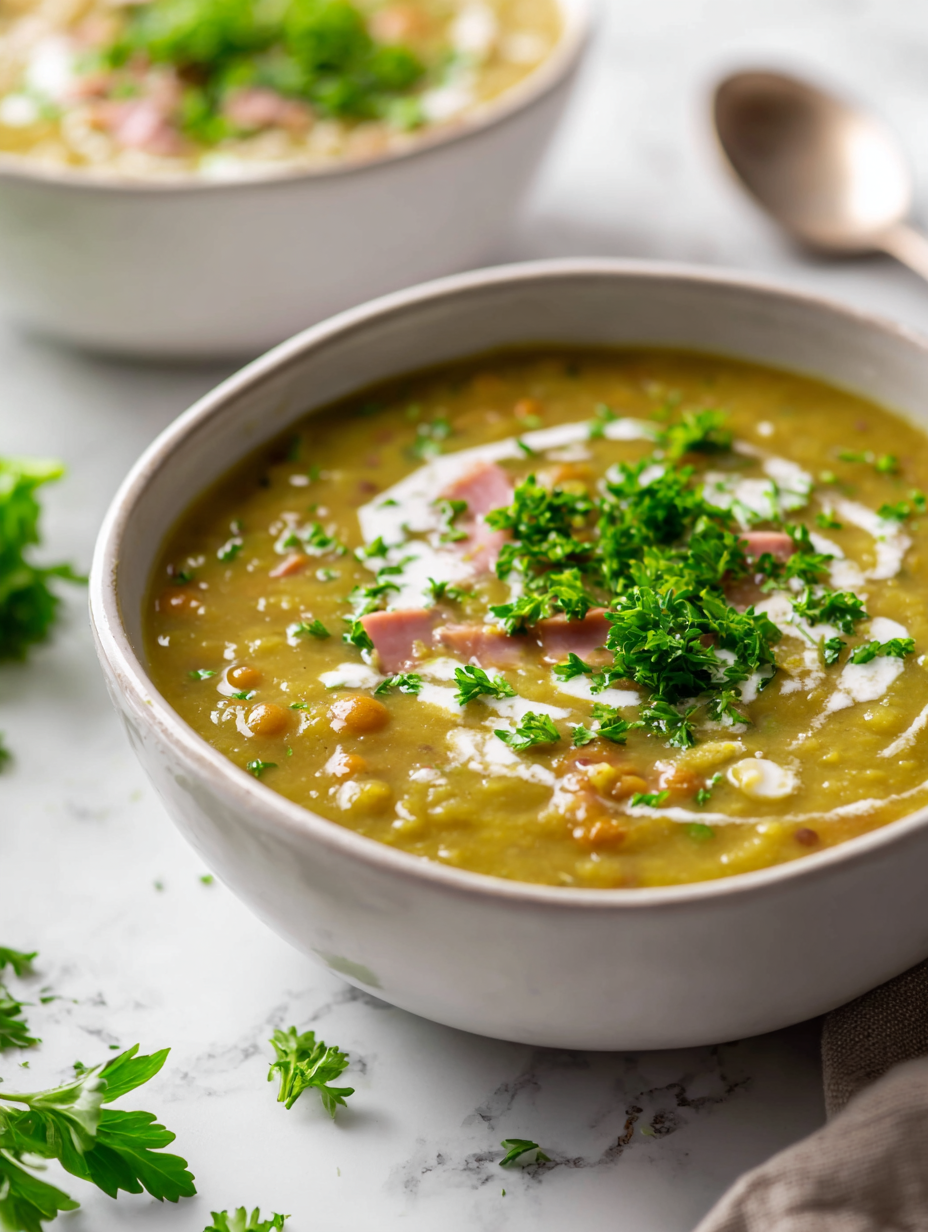
Slow-Cooked Split Pea Soup with Ham Hock
Ingredients
Equipment
Method
- Rinse the split peas thoroughly under cold water until the water runs clear; set aside.
- Peel and thinly slice the carrots, and finely chop the onion and crush the garlic cloves.
- In a skillet over medium heat, sauté the chopped onion and garlic in a splash of oil until fragrant and golden, about 5 minutes.
- Transfer the sautéed aromatics to your crockpot, then add the rinsed peas, sliced carrots, vegetable broth, ham hock, bay leaves, thyme, and black pepper.
- Set the crockpot to low and cook for 6 to 8 hours, stirring gently halfway through. The peas will soften and break down into a creamy, velvety texture, filling the house with a smoky aroma.
- Once the cooking time is up, remove the ham hock, shred the meat, and discard the bone and fatty bits. Return the shredded meat to the soup.
- Taste the soup and stir in a splash of apple cider vinegar to brighten the earthy flavors. If desired, stir in chopped kale or spinach and let wilt for a few minutes.
- Remove the bay leaves, give the soup a final stir, and serve hot in bowls, enjoying the velvety, smoky, and hearty flavors.
Notes
Tips & Tricks for Perfect Soup
- Use a splash of apple cider vinegar at the end to brighten the soup’s earthy richness.
- Rinse the split peas thoroughly to prevent grit and achieve a silky, smooth texture.
- Sauté onions and garlic first in a skillet until golden to deepen their sweet, smoky aroma.
- Keep an eye on the soup during the last 30 minutes; stir occasionally to prevent sticking or burning.
- When adding greens like kale or spinach, do so in the last 10 minutes for vibrant, fresh flavor.
- If the soup looks too thick, stir in a bit more broth or water to loosen it up without diluting flavor.
- Use a wooden spoon to gently stir, avoiding breaking down the peas and maintaining a velvety consistency.
Common mistakes and how to fix them
- FORGOT to rinse peas → add a rinse step to avoid grit and cloudiness.
- DUMPED in too much liquid → adjust broth amount for desired thickness.
- OVER-TORCHED at the end → keep an eye during final 30 minutes to prevent burning.
- MISSED removing bay leaves → always discard bay leaves before serving for better flavor.
Quick fixes and pantry swaps
- If/When the soup is too thick, splash in hot water and stir until smooth.
- When peas stay gritty, rinse thoroughly or cook a bit longer to soften completely.
- Splash a dash of vinegar if the flavor feels dull or flat at the end.
- Patch a burnt bottom by quickly transferring the top layer to a new pot, avoiding the charred bits.
- Shield delicate greens at the end with a lid or foil to prevent overcooking and color loss.
Prep, store, and reheat tips
- Prep the ingredients: rinse peas, chop vegetables, and sauté aromatics the night before for quicker assembly.
- Store cooked or partially cooked peas in an airtight container in the fridge for up to 3 days; they firm up slightly but reheat well.
- Leftover soup keeps in the fridge for 3-4 days; the flavors deepen, and the texture becomes even creamier overnight.
- Reheat gently on the stove over low heat, stirring occasionally, until steaming and velvety—about 10 minutes. Add a splash of water if it thickens too much.
Top questions about crockpot split pea soup
1. Can I cook split peas in the crockpot without soaking?
Yes, you can skip soaking the peas; they’ll just take a little longer to cook and may be slightly less creamy.
2. Can I make this soup vegetarian or vegan?
Absolutely, use vegetable broth or water if you prefer a lighter or vegetarian version. Just add extra seasoning to compensate.
3. How long does it take to cook in the crockpot?
It should take about 6-8 hours on low for the peas to become tender and the flavors to meld well.
4. Can I add greens to the soup?
Yes, you can add chopped kale or spinach in the last 10 minutes for a fresh, vibrant touch.
5. How do I reheat leftovers without losing texture?
If the soup thickens too much upon cooling, stir in a splash of hot broth or water when reheating.
6. Can I make this without ham hock?
Yes, instead of ham hock, smoked paprika or liquid smoke can mimic the smoky flavor for a vegetarian version.
7. How do I know when the soup is ready?
The soup is done when the peas are soft and break apart easily, with a velvety texture and smoky aroma.
8. Can I add acid to the soup?
Adding a splash of lemon juice or vinegar at the end brightens the earthy flavors and balances richness.
9. Can I prepare this soup ahead of time?
Yes, you can prep ingredients the night before, store them in the fridge, and assemble in the morning.
10. How long does the soup keep?
The soup can be stored in the fridge for up to 4 days or frozen for 1-2 months for longer storage.
This humble soup is more than just a comfort food; it’s a reminder of slower, simpler days when family gathered around a steaming bowl on a chilly evening. The smoky aroma, velvety texture, and rich depth of flavor make it a perfect dish for cozy weekends or a spontaneous dinner with friends.
Whenever I make this, I feel connected to those quiet moments of home cooking, where patience and good ingredients do all the work. It’s a dish that invites lingering at the table, sharing stories over hearty spoonsful, and savoring the satisfying simplicity of good, honest flavors.

Hi, I’m Ava Bennett. Welcome to Glowing With Pride. I’m Ava Bennett, a professional chef, recipe developer, and lifelong believer that food is one of the most powerful ways we express love, identity, and joy. This space was created from years of working in professional kitchens, countless late nights behind the line, and a deep desire to share food in a way that feels personal, proud, and purposeful. Cooking has never just been my career. It has been my language.
Leave a Reply