
There’s something about chicken soup that feels like a warm hug in a bowl, especially when it’s infused with unexpected lemon and herbs. I love how a simple base can transform into something lively, almost like a little party in your mouth. It’s a recipe born from chaos—cleaning out the fridge, tossing in whatever herbs I have, and ending up with something unexpectedly bright.
Why I keep returning to this chicken soup
It’s quick, adaptable, and always tastes like a little celebration. The lemon and herbs make it feel fresh, even on the dreariest days. Plus, it’s a reminder that simple ingredients can create something truly comforting.
Breaking down the ingredients
- Chicken breast or thighs: Cooked and shredded, they’re the protein backbone, tender and mild.
- Carrots and celery: The classic trio, adding sweetness and crunch, they bring texture and subtle flavor.
- Onions and garlic: Base aromatics; sauté until translucent and fragrant, building depth.
- Chicken broth: The soup’s liquid foundation, rich and savory, ideally homemade or low-sodium.
- Lemon juice: Brightens everything up, giving the soup a lively citrus kick.
- Fresh herbs (parsley, thyme): Herbaceous notes that lift and freshen each spoonful.
- Salt and pepper: Seasoning essentials—don’t skimp, but don’t overdo.
Tools of the trade for your chicken soup adventure
- Large pot: To simmer the soup evenly and hold all ingredients comfortably.
- Sharp knife: For chopping vegetables and herbs efficiently.
- Cutting board: A stable surface for prep work.
- Ladle: To serve and check the soup’s consistency.
- Measuring spoons: To add lemon juice and seasonings accurately.
Step-by-step to a soul-warming chicken soup
Step 1: Start by gently sautéing chopped onions, carrots, and celery in a large pot over medium heat until softened and fragrant, about 8 minutes.
Step 2: Add garlic and cook for another minute, until it’s just fragrant. Watch out for burning garlic—the smell should be sweet and aromatic.
Step 3: Pour in chicken broth, bring to a simmer, then add shredded cooked chicken and your choice of herbs. Simmer for 20 minutes to meld flavors.
Step 4: Taste and adjust salt. Finish with a splash of lemon juice and a handful of fresh herbs for brightness.
Cooking checkpoints and tips to keep in mind
- Onions should be translucent and fragrant, not browned.
- Chicken broth should be simmering gently, not boiling vigorously.
- Lemon juice added at the end keeps it bright and fresh, not dull.
- Soup should be hot and steaming, with the chicken tender and shreddable.
Common mistakes and how to fix them
- Adding lemon too early.? Add lemon juice at the end to prevent bitterness.
- Boiling chicken vigorously.? Simmer gently to avoid tough chicken.
- Over-salting.? Taste and adjust salt before serving.
- Dried herbs too early or in excess.? Use fresh herbs for maximum flavor.
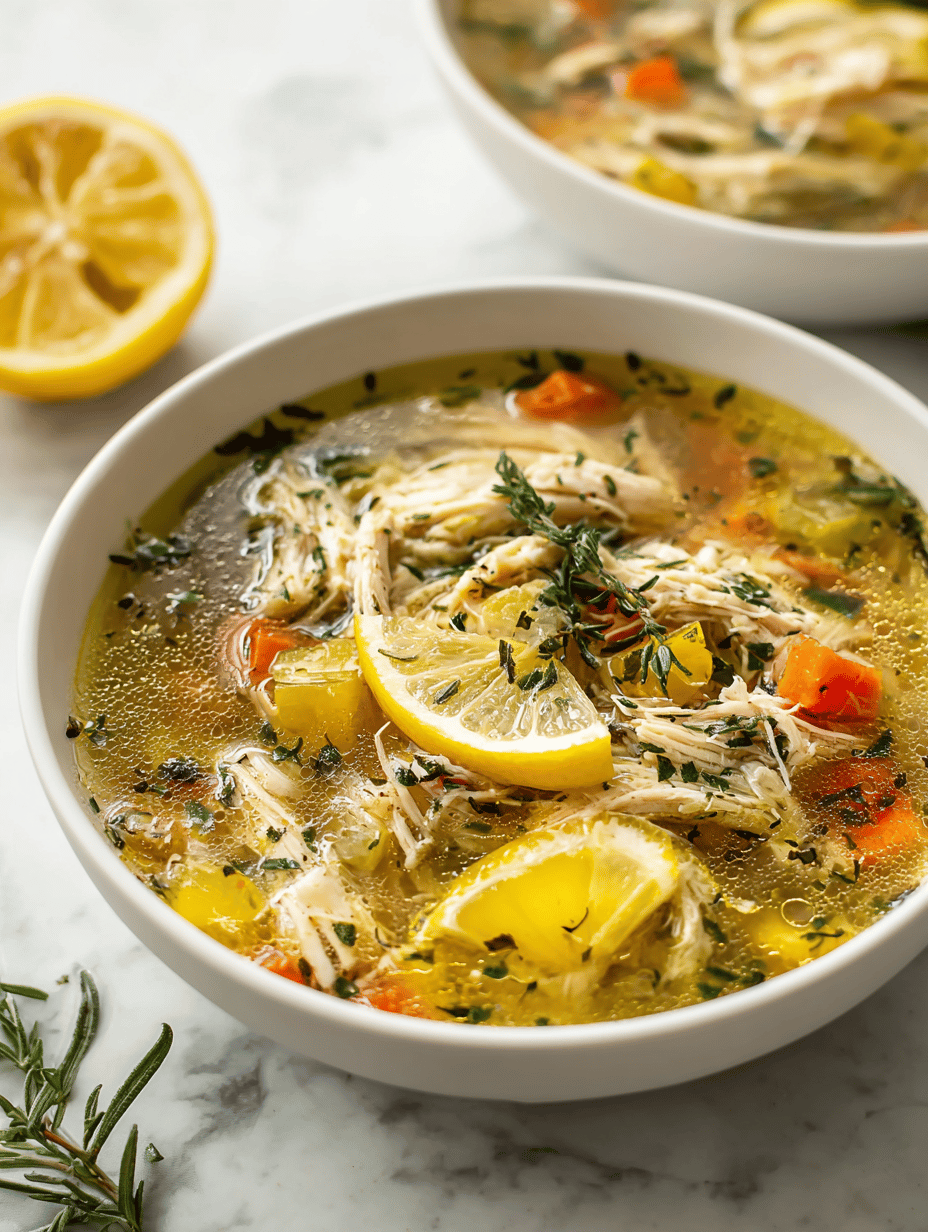
Lemon Herb Chicken Soup
Ingredients
Equipment
Method
- Heat a large pot over medium heat and add chopped onions, carrots, and celery. Sauté for about 8 minutes until the vegetables are soft, fragrant, and slightly translucent.
- Add minced garlic to the vegetables and cook for another minute until fragrant, being careful not to let it burn.
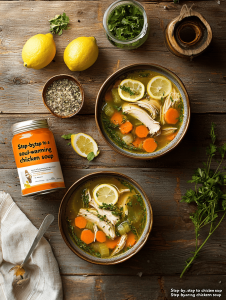
- Pour in the chicken broth and bring it to a gentle simmer. Add the shredded cooked chicken, fresh thyme sprig, and season with salt and pepper.

- Reduce the heat to low and let the soup simmer uncovered for about 20 minutes, allowing the flavors to meld and the vegetables to become tender.
- Taste the soup and adjust salt and pepper as needed. Remove the thyme sprig before proceeding.
- Stir in the freshly squeezed lemon juice and chopped parsley for brightness and freshness, giving the soup a final stir.
- Serve the soup hot, with a sprinkle of extra herbs if desired, and enjoy the vibrant, comforting flavors.
Notes

Hi, I’m Ava Bennett. Welcome to Glowing With Pride. I’m Ava Bennett, a professional chef, recipe developer, and lifelong believer that food is one of the most powerful ways we express love, identity, and joy. This space was created from years of working in professional kitchens, countless late nights behind the line, and a deep desire to share food in a way that feels personal, proud, and purposeful. Cooking has never just been my career. It has been my language.









Leave a Reply